
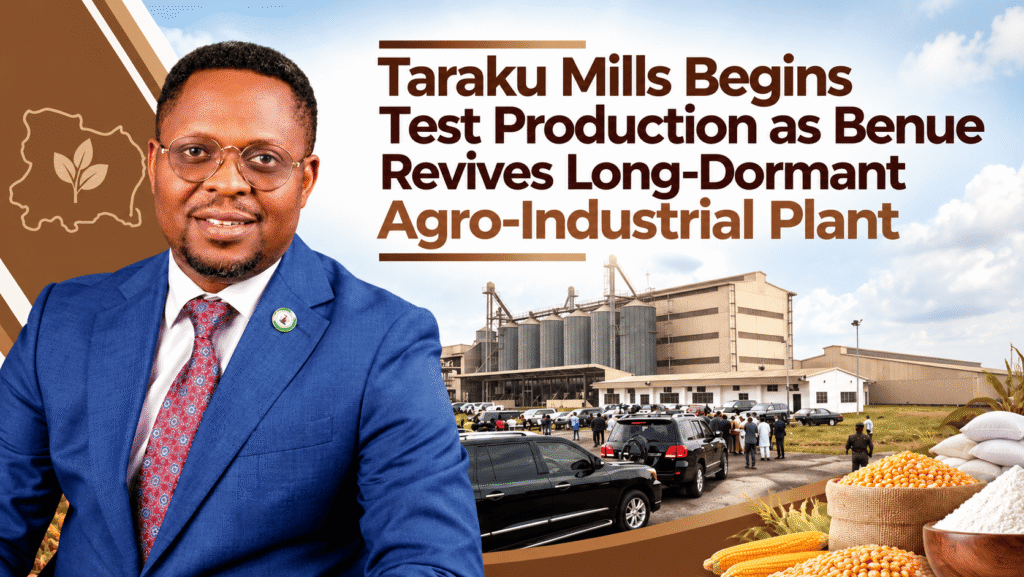

Taraku Mills has commenced its first phase of test production in Benue State after years of inactivity, marking a major step in efforts to restore the agro-processing facility to commercial operations.
The development follows months of rehabilitation work by the Benue Investment and Property Company Limited (BIPC), which is overseeing the revival of the facility.
The mill has also taken delivery of about 300 tonnes of soybeans in eight trucks to support the initial production process. According to BIPC officials, the first phase will focus on producing Golden Soya Oil.
The development is expected to reconnect farmers with a major industrial off-taker while supporting local processing and employment in Benue State.
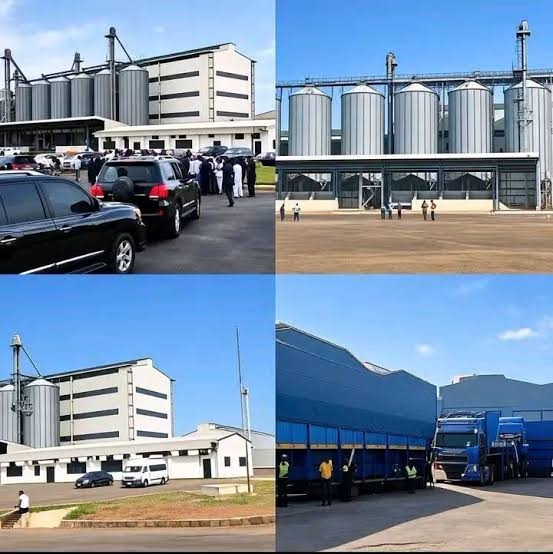
Taraku Mills Begins Test-Run Production
The commencement of test production follows an inspection by the BIPC board on September 30.
At the time, BIPC Group Managing Director, Dr Raymond Asemakaha, said the facility would undergo a test run during the weekend.
The exercise was designed to prepare the plant for full-scale production after extensive maintenance and rehabilitation.
By October 3, the test production had commenced.
Asemakaha said the revival was deliberately designed to return the dormant facility to productive use. He added that the project would provide a market for soybean and grain farmers.
The BIPC boss also said the revival could create direct and indirect employment opportunities in the state.
Plant Starts Below Its Full Production Capacity
The initial test run is being conducted below the plant’s installed capacity.
Plant Manager, Engr. James Terngu Ikyuve, said Taraku Mills has an installed production capacity of 200 tonnes per day.
However, management has decided to begin at approximately 50 tonnes per day.
The lower starting volume reflects the need to gradually reactivate equipment that remained unused for several years.
According to Ikyuve, the facility has already commenced the purification process after receiving the soybean consignment.
Crushing is expected to follow, after which the extracted oil will undergo refining.
The plant manager said the company expects Golden Soya Oil to reach the market before the end of October.
BIPC Moves to Restore Taraku Mills
The latest test production is the result of several months of technical rehabilitation.
In July, BIPC said foreign expatriates and technicians were working on critical sections of the plant.
The technical team had targeted the first plant for a test run within 30 to 35 days.
BIPC said most of the equipment and plant components remained intact despite the prolonged period of inactivity.
By September, BIPC reported that more than 80 percent of the first phase of maintenance had been completed.
The company subsequently ordered additional soybean supplies to enable purification and other preparatory processes ahead of production.
An earlier assessment by engineers from Egyptian company Al Wadi Al Akhdar Oil Mills also placed the facility at about 75 percent readiness for full-scale production.
The engineers identified areas including the boiler and solvent sections for further upgrades.
From Dormant Factory to Agro-Industrial Hub
Taraku Mills was established in 1989 and became one of Benue’s major agro-processing facilities.
Its product lines have historically included vegetable oil, animal feed and other agro-allied products. Channels Television reported that the facility had been abandoned for years before the latest rehabilitation effort.
BIPC’s July account described the facility as having been moribund since 2013.
The company said the plant is designed to process soybeans, maize, beniseed and cassava.
It is also expected to produce edible oil, animal feed and other industrial raw materials.
The revival therefore goes beyond restarting one factory.
It could create a stronger connection between Benue’s agricultural producers and local processing industries.
Farmers Could Become Key Beneficiaries
Soybean production will be central to the plant’s early operations.
BIPC has repeatedly encouraged farmers to increase soybean cultivation to provide raw materials for Taraku Mills.
The Egyptian technical team also urged farmers to expand production of soybeans, groundnuts and maize during its assessment of the facility.
For farmers, a functioning industrial off-taker could provide an additional route to market.
BIPC has said it wants Taraku Mills to provide off-take opportunities for soybean producers and manufacturers of other agricultural raw materials.
That could support demand for locally produced crops while reducing the distance between primary agricultural production and processing.
Golden Soya Oil Expected in the Market
The immediate focus is the production of Golden Soya Oil.
BIPC had earlier indicated that locally produced Golden Oil could become available during the yuletide period.
Following the commencement of test production, the plant manager gave a more specific indication that the oil could reach the market before the end of October.
However, the initial test run should not be confused with full-scale commercial production.
The plant is starting at around 50 tonnes daily against its stated 200-tonne installed capacity.
Management will need to demonstrate that the rehabilitated equipment can operate consistently before moving towards higher production levels.
What the Taraku Mills Revival Means for Benue
The revival of Taraku Mills forms part of a broader effort by the Benue government to return dormant state assets to productive use.
BIPC said the facility’s revival could strengthen the state’s agricultural value chain, create jobs and expand local processing.
The company has also said it secured partners to manage production and commercial operations at the mill.
For Benue, the significance extends beyond the availability of vegetable oil.
A functioning agro-processing plant can create demand for agricultural commodities, support transportation and logistics, generate industrial employment and provide opportunities for businesses supplying the factory.
The next phase will therefore be closely watched as Taraku Mills moves from test production towards sustained commercial operations.
For now, the delivery of 300 tonnes of soybeans and the commencement of test production represent the first concrete production milestone after years of inactivity.
If the plant successfully scales towards its stated capacity, Taraku Mills could once again become an important link between Benue’s farmers and the state’s agro-industrial economy.