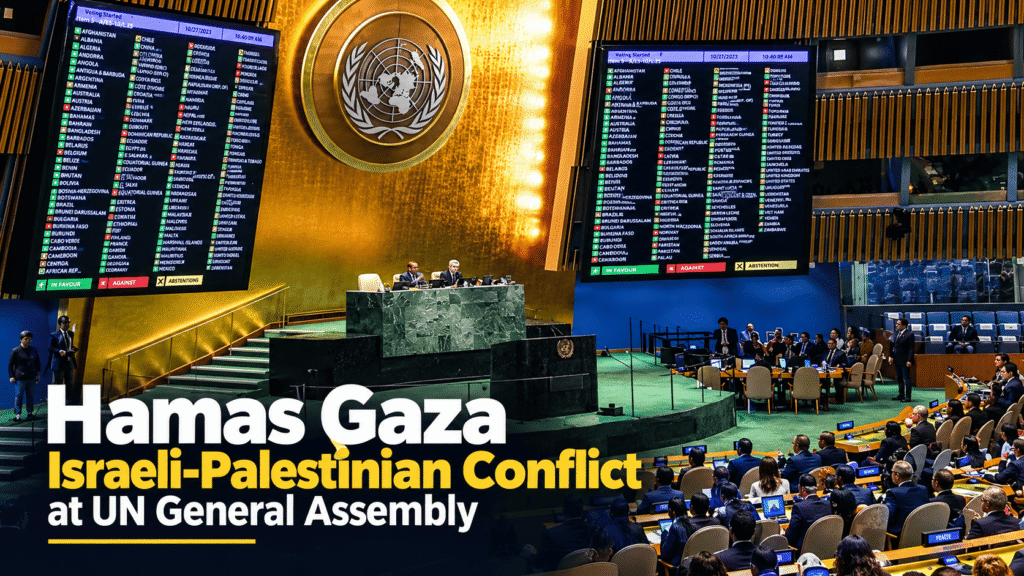

As world leaders gathered at the 81st session of the United Nations General Assembly in New York, one reality dominated the diplomacy: nearly three years after the October 7, 2023 attack, Gaza remains a deeply polarizing international crisis.
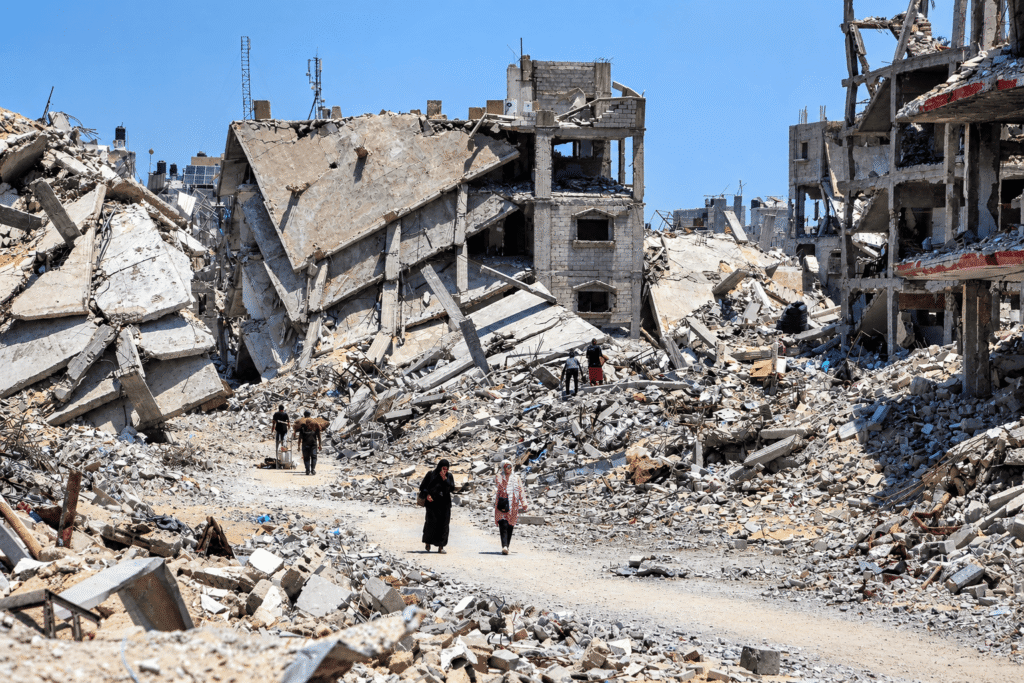
While the official theme of the 2026 assembly revolves around “Restoring Trust and Managing Transformation,” the atmosphere inside the hall reflects deep geopolitical fractures. With 2.1 million Palestinians facing displaced conditions, destroyed infrastructure, and an impending winter, the UN has become a fiery arena for competing visions of accountability, regional security, and statehood.
A Catastrophic Humanitarian Reality
Beyond the diplomatic clashes in New York, reports from the UN Office for the Coordination of Humanitarian Affairs (OCHA) paint a grim picture on the ground:
-
Displacement: Over 90% of Gaza’s population remains internally displaced, many crammed into makeshift tent camps.
-
Water Crisis: 91% of assessed households experience severe water insecurity, with all six primary wastewater treatment plants remaining non-operational.
-
Winter Risk: Damaged drainage networks and overcrowded shelters leave millions vulnerable to seasonal flooding and disease outbreaks.
-
Logistical Bottlenecks: Aid organizations continue to navigate strict movement controls, border delays, and critical funding shortfalls.
While international relief agencies scramble to secure basic supplies, the broader political debate remains locked over who bears ultimate responsibility for the suffering.
Dueling Worldviews on the UN Floor
The 2026 General Debate highlighted the vast chasm between world powers over how to resolve the conflict:
[UN General Assembly Debate]
       │
       ├─► Israel: Defends military necessity to dismantle Hamas; rejects civilian targeting charges
       ├─► Global South & Allies: Demand immediate ceasefires, unrestricted aid & Palestinian statehood
       └─► UN Leadership: Warns against international law collapse; calls for a two-state solution
-
Israel’s Position: Prime Minister Benjamin Netanyahu addressed the assembly to defend Israel’s military objectives, reiterating that operations are strictly aimed at eradicating Hamas infrastructure. Israeli officials continue to reject allegations of deliberate civilian harm, maintaining that Hamas embeds its military operations within civilian populations.
-
The Global Counter: Leaders like Turkish President Recep Tayyip Erdogan delivered blistering critiques of the international response, demanding immediate recognition of Palestinian statehood and formal accountability for civilian casualties.
-
UN Secretariat: Outgoing Secretary-General António Guterres reiterated that lasting peace is impossible without an immediate, permanent ceasefire and a viable, sovereign two-state solution.
Adding to the diplomatic friction, Palestinian President Mahmoud Abbas was absent from the gathering for a second consecutive year after the United States declined to issue a visa for his delegation.
The Governance Vacuum: Who Rules Gaza Next?
The central unanswered question haunting the halls of the UN is what follows the military campaign. With Hamas having governed the strip since 2007 and Israel firmly rejecting any post-war role for the group, international actors are scrambling to design a viable political framework.
| Proposal | Key Features | Major Obstacles |
| Revitalized Palestinian Authority (PA) | Re-unify Gaza and the West Bank under central administrative leadership. | Lacks broad political consensus; rejected by current Israeli leadership. |
| Multinational Security Force | Regional/international peacekeepers manage transitional security. | Sovereign nations hesitant to put boots on the ground without a clear peace agreement. |
| US-Backed Reconstruction Plan | $2.45B initiative featuring 66 targeted infrastructure programs. | Cannot launch without an active ceasefire and guaranteed humanitarian access. |
What Comes Next?
The UN General Assembly serves as a powerful diplomatic sounding board, but its resolutions carry limited enforcement power without unanimous backing from the UN Security Council—where vetoes frequently stall binding action.
As the 81st General Assembly draws to a close, the gap between high-level diplomatic rhetoric and the reality on the ground in Gaza remains vast. Rebuilding the enclave will demand far more than financial pledges; it requires a durable ceasefire, a clear political roadmap, and the rare political courage needed to break a decades-long cycle of violence.