
Access to capital has long been cited as the single biggest bottleneck for African small and medium-sized enterprises (SMEs). Yet, ask any entrepreneur who has tried to scale across borders, and they will tell you that money is only half the battle. Without market connections, regulatory guidance, and digital skills, even a well-funded business can hit a wall.
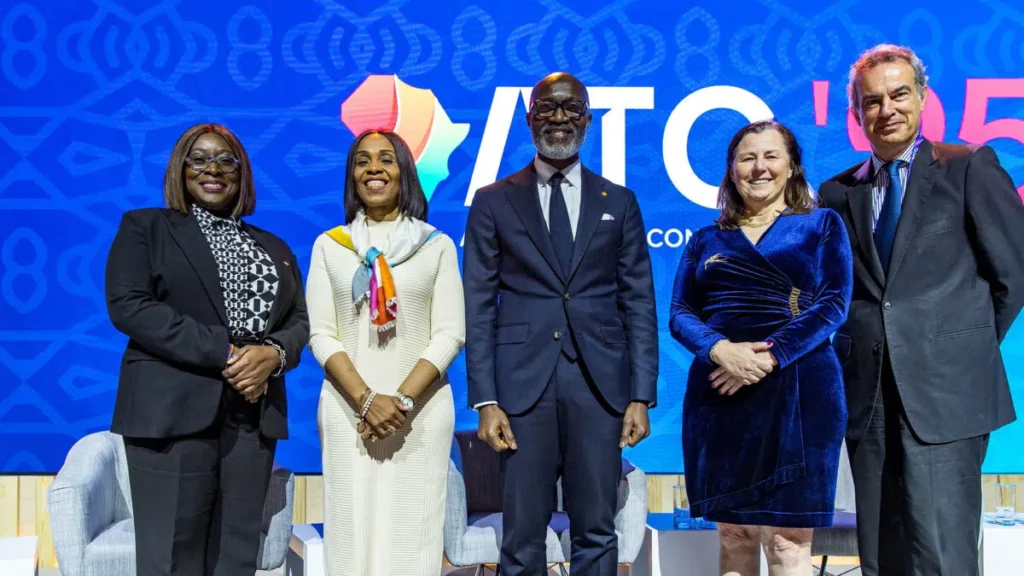
To tackle this double challenge, the International Trade Centre (ITC) and Access Bank have launched a three-year partnership designed to give small businesses across 14 African countries a multi-layered boost. Formally sealed through a memorandum of understanding signed on the sidelines of the United Nations General Assembly in New York, the initiative pairs the ITC’s trade development expertise with Access Bank’s pan-African banking footprint.
Rather than treating funding as a standalone fix, the initiative combines access to finance with hands-on business training, digital tools, and cross-border trade connections.
Ghana Pilot Prioritizes Women Entrepreneurs
The project kicks off with a pilot program in Ghana, running from September 2026 through June 2027. Recognizing that female founders often face the steepest hurdles when seeking institutional backing and market access, the initial rollout explicitly prioritizes women-led enterprises.
During this first phase, local entrepreneurs will utilize ITC’s digital learning platforms, benefit from “train-the-trainer” courses, and receive hands-on support coordinated alongside Access Africa Office personnel—the division overseeing Access Bank’s continental subsidiaries.
Once the Ghana pilot establishes a clear blueprint, the partners plan to roll out the framework across 13 additional participating countries starting in 2027:
-
Central & Southern Africa: Angola, Botswana, Cameroon, Democratic Republic of Congo, Mozambique, South Africa, and Zambia.
-
West Africa: The Gambia, Ghana, Guinea, and Sierra Leone.
-
East Africa: Kenya, Rwanda, and Tanzania.
Five Core Pillars Driving the Three-Year Mandate
Rather than delivering one-off loans or basic financial literacy workshops, the initiative centers on five interconnected focus areas built to help businesses establish long-term operational resilience:
-
SME-Driven Job Creation: Supporting high-growth enterprises capable of creating meaningful local employment.
-
Access to Finance: Bridging credit gaps so growing businesses can invest in equipment, scale production, and fulfill larger orders.
-
Business Sustainability: Preparing founders to navigate evolving environmental and governance standards required by international buyers.
-
Capacity Building & Digital Trade: Training business owners in modern management, digital trade tools, and e-commerce platforms.
-
Market Access & AfCFTA Integration: Directing businesses toward new commercial opportunities created under the African Continental Free Trade Area.
“Financing remains a major barrier to trade for small businesses across Africa,” noted Pamela Coke-Hamilton, Executive Director of the International Trade Centre. “This partnership directly targets that friction point by surrounding financial backing with the knowledge, networks, and market bridges businesses need to compete globally.”
Leveraging Pan-African Reach
As a joint agency of the World Trade Organization and the United Nations, the ITC brings decades of experience helping SMEs in developing economies build global competitiveness. Scaling that expertise, however, requires deep local infrastructure.
That is where Access Bank comes in. Operating across 25 countries on three continents—with over 700 branches and 63 million customers—the bank provides the physical and financial network needed to reach grass-roots business communities.
Seyi Kumapayi, Executive Director of African Subsidiaries at Access Bank, emphasized that long-term enterprise survival depends on looking beyond simple line-of-credit offers. “Capital is essential, but capital alone does not guarantee a small business will scale,” Kumapayi explained. “By combining our financial reach with the ITC’s expertise in trade networks and market connections, we are giving founders a complete toolkit to build resilient, cross-border businesses.”
Preparing SMEs for Digital Trade and the AfCFTA
A central ambition of the partnership is linking SME growth with intra-African trade. The African Continental Free Trade Area (AfCFTA) was established to create a unified continental market by dismantling trade barriers among participating African economies. While the policy framework opens huge possibilities, small businesses still need practical knowledge to clear cross-border hurdles.
Digital capabilities are key to closing that gap. Beginning with the initial Ghana rollout and expanding in 2027, the program will integrate specialized modules on digital marketplace tools, international standards, and online supply-chain management. These tools will help traditional domestic operations transition into structured regional vendors.
What This Means for African Small Businesses
While the initial focus remains on proving the model in Ghana, the partnership’s overall success will depend on how effectively it scales across all 14 markets after 2027.
By linking finance directly to digital literacy, sustainability, market connections, and regional trade policies, the ITC and Access Bank are testing a more comprehensive framework for economic development. As the rollout progresses, business participation rates, cross-border sales, and actual job creation will serve as the true benchmarks of its impact.