
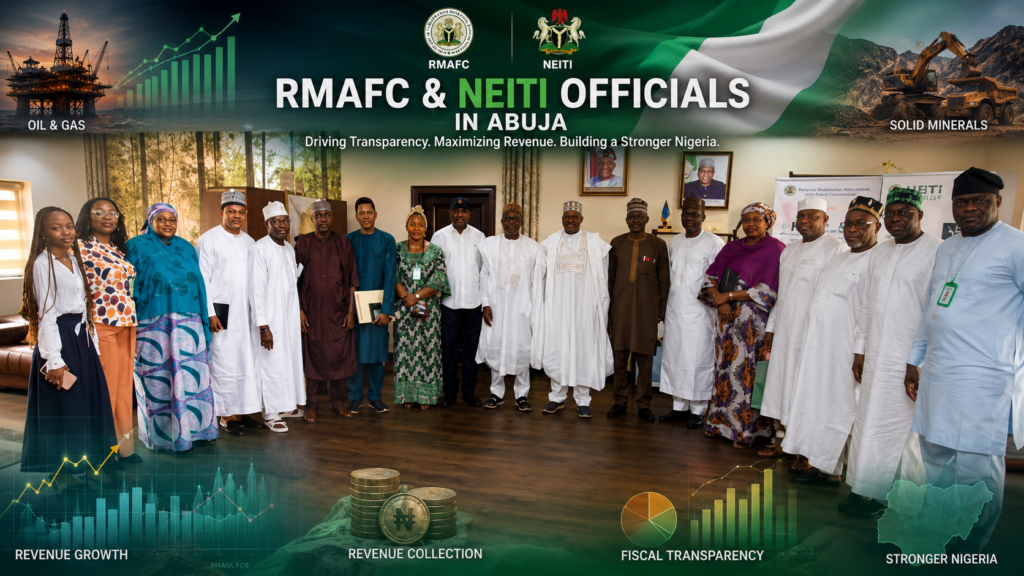

Nigeria’s revenue crisis is no longer simply an economic problem. It is becoming a political survival test. Billions of naira and dollars remain trapped within Nigeria’s complex extractive economy. Meanwhile, government revenues continue struggling to match national demands. That contradiction explains the growing urgency around revenue mobilisation. The Revenue Mobilisation Allocation and Fiscal Commission (RMAFC) is now seeking closer cooperation with the Nigeria Extractive Industries Transparency Initiative (NEITI). On the surface, the partnership appears administrative. However, its implications could be far more political. The two institutions occupy different positions within Nigeria’s fiscal architecture. Yet, their mandates overlap around one critical objective. That objective is ensuring the country receives what it is legally owed. For years, NEITI has exposed discrepancies within Nigeria’s oil, gas, and mining sectors. However, audit findings have not always translated into immediate revenue recovery. RMAFC, meanwhile, monitors revenues accruing to the Federation Account. It also plays a crucial role in revenue allocation. The proposed institutional alignment could therefore close an important gap. NEITI can provide the data. RMAFC can apply its constitutional oversight responsibilities. The question, however, is whether this partnership can move beyond official statements.
Why the RMAFC-NEITI Partnership Matters
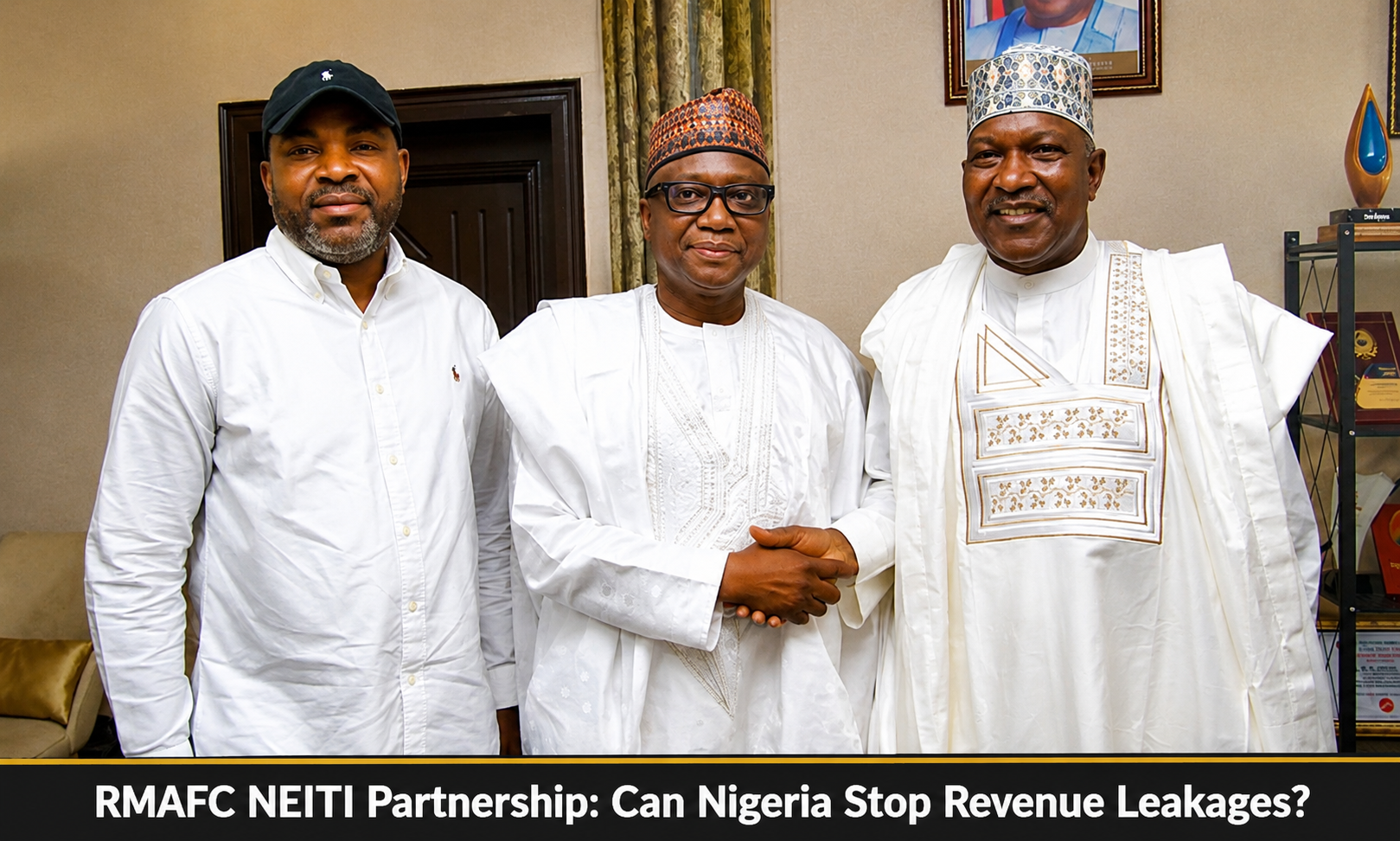
RMAFC Chairman Dr. Mohammed Bello Shehu recently hosted NEITI Executive Secretary Hon. Musa Sarki Adar in Abuja. Both officials described their engagement as strategically important. Their discussions point toward deeper institutional cooperation between Nigeria’s fiscal and extractive-sector watchdogs. That cooperation could become significant for one simple reason. Nigeria cannot afford to leave recoverable revenue sitting inside audit reports. For years, NEITI reports have identified financial discrepancies across the extractive sector. Yet, enforcement has often remained slower than the revelations. That disconnect has weakened the practical impact of transparency initiatives. Meanwhile, Nigeria continues facing enormous fiscal pressures. Debt obligations remain substantial. Government expenditure continues rising. Revenue performance remains critical to economic stability. Crude oil theft also continues threatening production and public revenue. Consequently, every recoverable naira has acquired greater political importance. The RMAFC-NEITI relationship could therefore represent more than institutional cooperation. It could become part of a broader effort to strengthen Nigeria’s fiscal capacity.
From Audit Reports to Revenue Recovery
This is where the partnership becomes particularly interesting. NEITI possesses valuable information about financial flows across the extractive sector. Its audits can expose discrepancies between production, exports, payments, taxes, and government receipts. However, identifying a discrepancy is different from recovering the money. That distinction has historically complicated Nigeria’s revenue mobilisation efforts. RMAFC brings a different institutional capacity to the table. Its mandate focuses on revenues accruing to the Federation Account and the allocation of those resources. Therefore, closer coordination could create a stronger chain. NEITI identifies potential leakages. RMAFC helps translate those findings into fiscal action. That process could fundamentally change how Nigeria responds to revenue discrepancies. Instead of allowing audit findings to gather dust, institutions could pursue measurable financial recovery. That would give transparency a practical economic consequence.
The Politics Behind the Numbers
There is also a political dimension to this development. Nigeria’s federal structure depends heavily on shared revenues. States and local governments rely significantly on allocations from the Federation Account. Therefore, revenue mobilisation directly affects political relationships across the country. Governors routinely demand stronger revenue performance from the federal government. Higher Federation Account receipts can provide states with greater fiscal breathing space. Consequently, stronger extractive revenue collection could strengthen federal-state relations. However, the opposite is also possible. Any serious attempt to recover hidden revenues will create resistance. Some businesses may face additional scrutiny. Some intermediaries could lose financial advantages. Most importantly, entrenched interests may resist changes to established revenue channels. That is why implementation will matter more than official declarations.
The Real Test: Political Will
Nigeria does not lack committees, reports, investigations, or reform proposals. The country’s recurring challenge is implementation. This partnership will therefore face its most important test after the meetings end. Will agencies share data consistently? Will discrepancies trigger immediate investigations? Will outstanding liabilities translate into actual recoveries? Will politically influential companies receive the same treatment as smaller operators? Those questions will determine whether the initiative becomes transformative. Indeed, transparency becomes meaningful only when information produces consequences. Without enforcement, even the most sophisticated audit system remains largely symbolic.
Why the Extractive Sector Matters
Nigeria’s oil industry remains central to national revenue. However, the country’s fiscal challenge extends beyond crude oil. Gas and solid minerals represent significant opportunities for revenue expansion. The solid minerals sector is particularly important. Nigeria possesses substantial mineral resources across several states. Yet, informal operations, illegal mining, weak monitoring, and inadequate documentation remain persistent concerns. Consequently, significant economic value can escape formal government channels. A stronger RMAFC-NEITI partnership could potentially address some of these weaknesses. Better data could improve visibility across the value chain. More importantly, improved visibility could support stronger revenue assessment. That could help Nigeria capture value currently lost through informal or illegal activities.
The Winners and the Losers
Every serious transparency reform changes existing economic incentives. Some stakeholders therefore stand to benefit significantly. State and local governments could benefit from higher Federation Account revenues. Citizens could ultimately benefit from improved public resources. Reform-minded institutions could also gain greater authority and credibility. However, some interests could face significant pressure. Extractive companies with unresolved liabilities may face greater scrutiny. Illegal mining networks could encounter stronger monitoring. Meanwhile, individuals benefiting from opaque revenue arrangements could lose influence. That creates an important political reality. Revenue reform is rarely neutral. It redistributes financial power. Therefore, resistance should be expected whenever established interests face serious scrutiny.
Could This Change Nigeria’s Fiscal Politics?
The answer depends on whether increased revenue actually reaches government accounts. If successful, the implications could extend beyond fiscal management. Higher revenues could reduce pressure for additional borrowing. They could also provide greater funding for infrastructure and public services. For governors, stronger allocations could improve budget planning. For the federal government, additional revenue could provide greater policy flexibility. Politically, that flexibility matters. Governments with stronger finances have more room to deliver visible projects. They also have greater capacity to respond to economic pressures. Consequently, revenue mobilisation can influence public confidence. It can also influence political narratives ahead of elections. However, Nigerians are increasingly demanding more than higher government revenues. They want transparency about how those revenues are spent. Therefore, revenue mobilisation and accountability must advance together.
The 2027 Political Dimension
Nigeria’s approaching political cycle adds another layer to the discussion. Economic performance will remain central to political competition. Citizens are likely to judge governments through inflation, employment, infrastructure, and living standards. Revenue performance will influence each of those areas indirectly. Consequently, successful revenue recovery could provide the government with additional political breathing room. It could support greater spending on visible development projects. It could also strengthen relationships between Abuja and the states. However, failure could produce the opposite effect. If another round of audits identifies billions in leakages without meaningful recovery, public frustration could deepen. That would reinforce a familiar perception. Nigeria knows where money is disappearing, but struggles to stop it. That perception carries serious political consequences.
The Bigger Question About Transparency
The real issue is not whether RMAFC and NEITI should cooperate. They clearly should. The bigger question concerns what happens after cooperation begins. Can data move quickly between institutions? Can government agencies act on that information? Can powerful interests be investigated without political interference? Can recovered funds be transparently accounted for? These questions go to the heart of Nigeria’s governance challenge. Transparency cannot remain an annual reporting exercise. It must become part of everyday government operations. That requires technology, institutional discipline, political courage, and sustained enforcement. Without those elements, institutional cooperation will remain incomplete.
What Nigerians Should Watch
The next phase will reveal whether this partnership is genuinely different. First, Nigerians should watch for a formal framework governing institutional cooperation. A memorandum of understanding would provide greater clarity about responsibilities. More importantly, citizens should look for measurable enforcement outcomes. Outstanding liabilities should become public knowledge where legally appropriate. Recovered funds should also be clearly documented. Furthermore, Nigerians should watch developments within the solid minerals sector. Improved monitoring could reveal whether the partnership extends beyond oil and gas. International engagements will also provide useful indicators. Nigeria’s participation in global transparency initiatives will test its reform credibility. However, domestic results will ultimately matter more than international applause.
The Moment of Truth
The RMAFC-NEITI partnership arrives at a difficult moment for Nigeria. Government needs more revenue. States need stronger allocations. Citizens demand better services. Meanwhile, the country continues losing value through institutional weaknesses and revenue leakages. That makes this partnership potentially significant. NEITI has the analytical capacity to identify problems. RMAFC has an important role within Nigeria’s revenue architecture. Bringing those strengths closer together makes institutional sense. Yet, Nigeria has seen promising reforms before. The difference this time must be enforcement. Political leaders must allow institutions to follow the evidence. Agencies must pursue recoverable revenues regardless of the interests involved. And recovered funds must ultimately translate into public value.
Beyond the Handshake
The RMAFC-NEITI partnership could become an important moment in Nigeria’s fiscal reform journey. But institutional handshakes do not recover missing revenues. Reports do not automatically translate into billions returning to public coffers. Only sustained political will, credible enforcement, and institutional cooperation can achieve that. Nigeria already possesses considerable knowledge about its revenue leakages. The country now needs the courage to act on that knowledge. If RMAFC and NEITI can bridge the gap between information and enforcement, the impact could be substantial.The partnership could strengthen transparency across oil, gas, and solid minerals. It could also improve revenues available for national development. Ultimately, the real measure of success will not be another report. It will be the money recovered, the leakages stopped, and the public value created. That is where Nigeria’s latest transparency partnership must prove itself.
Nigeria’s revenue crisis is no longer simply an economic problem. It is becoming a political survival test. Billions of naira and dollars remain trapped within Nigeria’s complex extractive economy. Meanwhile, government revenues continue struggling to match national demands. That contradiction explains the growing urgency around revenue mobilisation. The Revenue Mobilisation Allocation and Fiscal Commission (RMAFC) is now seeking closer cooperation with the Nigeria Extractive Industries Transparency Initiative (NEITI). On the surface, the partnership appears administrative. However, its implications could be far more political. The two institutions occupy different positions within Nigeria’s fiscal architecture. Yet, their mandates overlap around one critical objective. That objective is ensuring the country receives what it is legally owed. For years, NEITI has exposed discrepancies within Nigeria’s oil, gas, and mining sectors. However, audit findings have not always translated into immediate revenue recovery. RMAFC, meanwhile, monitors revenues accruing to the Federation Account. It also plays a crucial role in revenue allocation. The proposed institutional alignment could therefore close an important gap. NEITI can provide the data. RMAFC can apply its constitutional oversight responsibilities. The question, however, is whether this partnership can move beyond official statements.
Why the RMAFC-NEITI Partnership Matters
RMAFC Chairman Dr. Mohammed Bello Shehu recently hosted NEITI Executive Secretary Hon. Musa Sarki Adar in Abuja. Both officials described their engagement as strategically important. Their discussions point toward deeper institutional cooperation between Nigeria’s fiscal and extractive-sector watchdogs. That cooperation could become significant for one simple reason. Nigeria cannot afford to leave recoverable revenue sitting inside audit reports. For years, NEITI reports have identified financial discrepancies across the extractive sector. Yet, enforcement has often remained slower than the revelations. That disconnect has weakened the practical impact of transparency initiatives. Meanwhile, Nigeria continues facing enormous fiscal pressures. Debt obligations remain substantial. Government expenditure continues rising. Revenue performance remains critical to economic stability. Crude oil theft also continues threatening production and public revenue. Consequently, every recoverable naira has acquired greater political importance. The RMAFC-NEITI relationship could therefore represent more than institutional cooperation. It could become part of a broader effort to strengthen Nigeria’s fiscal capacity.
From Audit Reports to Revenue Recovery
This is where the partnership becomes particularly interesting. NEITI possesses valuable information about financial flows across the extractive sector. Its audits can expose discrepancies between production, exports, payments, taxes, and government receipts. However, identifying a discrepancy is different from recovering the money. That distinction has historically complicated Nigeria’s revenue mobilisation efforts. RMAFC brings a different institutional capacity to the table. Its mandate focuses on revenues accruing to the Federation Account and the allocation of those resources. Therefore, closer coordination could create a stronger chain. NEITI identifies potential leakages. RMAFC helps translate those findings into fiscal action. That process could fundamentally change how Nigeria responds to revenue discrepancies. Instead of allowing audit findings to gather dust, institutions could pursue measurable financial recovery. That would give transparency a practical economic consequence.
The Politics Behind the Numbers
There is also a political dimension to this development. Nigeria’s federal structure depends heavily on shared revenues. States and local governments rely significantly on allocations from the Federation Account. Therefore, revenue mobilisation directly affects political relationships across the country. Governors routinely demand stronger revenue performance from the federal government. Higher Federation Account receipts can provide states with greater fiscal breathing space. Consequently, stronger extractive revenue collection could strengthen federal-state relations. However, the opposite is also possible. Any serious attempt to recover hidden revenues will create resistance. Some businesses may face additional scrutiny. Some intermediaries could lose financial advantages. Most importantly, entrenched interests may resist changes to established revenue channels. That is why implementation will matter more than official declarations.
The Real Test: Political Will
Nigeria does not lack committees, reports, investigations, or reform proposals. The country’s recurring challenge is implementation. This partnership will therefore face its most important test after the meetings end. Will agencies share data consistently? Will discrepancies trigger immediate investigations? Will outstanding liabilities translate into actual recoveries? Will politically influential companies receive the same treatment as smaller operators? Those questions will determine whether the initiative becomes transformative. Indeed, transparency becomes meaningful only when information produces consequences. Without enforcement, even the most sophisticated audit system remains largely symbolic.
Why the Extractive Sector Matters
Nigeria’s oil industry remains central to national revenue. However, the country’s fiscal challenge extends beyond crude oil. Gas and solid minerals represent significant opportunities for revenue expansion. The solid minerals sector is particularly important. Nigeria possesses substantial mineral resources across several states. Yet, informal operations, illegal mining, weak monitoring, and inadequate documentation remain persistent concerns. Consequently, significant economic value can escape formal government channels. A stronger RMAFC-NEITI partnership could potentially address some of these weaknesses. Better data could improve visibility across the value chain. More importantly, improved visibility could support stronger revenue assessment. That could help Nigeria capture value currently lost through informal or illegal activities.
The Winners and the Losers
Every serious transparency reform changes existing economic incentives. Some stakeholders therefore stand to benefit significantly. State and local governments could benefit from higher Federation Account revenues. Citizens could ultimately benefit from improved public resources. Reform-minded institutions could also gain greater authority and credibility. However, some interests could face significant pressure. Extractive companies with unresolved liabilities may face greater scrutiny. Illegal mining networks could encounter stronger monitoring. Meanwhile, individuals benefiting from opaque revenue arrangements could lose influence. That creates an important political reality. Revenue reform is rarely neutral. It redistributes financial power. Therefore, resistance should be expected whenever established interests face serious scrutiny.
Could This Change Nigeria’s Fiscal Politics?
The answer depends on whether increased revenue actually reaches government accounts. If successful, the implications could extend beyond fiscal management. Higher revenues could reduce pressure for additional borrowing. They could also provide greater funding for infrastructure and public services. For governors, stronger allocations could improve budget planning. For the federal government, additional revenue could provide greater policy flexibility. Politically, that flexibility matters. Governments with stronger finances have more room to deliver visible projects. They also have greater capacity to respond to economic pressures. Consequently, revenue mobilisation can influence public confidence. It can also influence political narratives ahead of elections. However, Nigerians are increasingly demanding more than higher government revenues. They want transparency about how those revenues are spent. Therefore, revenue mobilisation and accountability must advance together.
The 2027 Political Dimension
Nigeria’s approaching political cycle adds another layer to the discussion. Economic performance will remain central to political competition. Citizens are likely to judge governments through inflation, employment, infrastructure, and living standards. Revenue performance will influence each of those areas indirectly. Consequently, successful revenue recovery could provide the government with additional political breathing room. It could support greater spending on visible development projects. It could also strengthen relationships between Abuja and the states. However, failure could produce the opposite effect. If another round of audits identifies billions in leakages without meaningful recovery, public frustration could deepen. That would reinforce a familiar perception. Nigeria knows where money is disappearing, but struggles to stop it. That perception carries serious political consequences.
The Bigger Question About Transparency
The real issue is not whether RMAFC and NEITI should cooperate. They clearly should. The bigger question concerns what happens after cooperation begins. Can data move quickly between institutions? Can government agencies act on that information? Can powerful interests be investigated without political interference? Can recovered funds be transparently accounted for? These questions go to the heart of Nigeria’s governance challenge. Transparency cannot remain an annual reporting exercise. It must become part of everyday government operations. That requires technology, institutional discipline, political courage, and sustained enforcement. Without those elements, institutional cooperation will remain incomplete.
What Nigerians Should Watch
The next phase will reveal whether this partnership is genuinely different. First, Nigerians should watch for a formal framework governing institutional cooperation. A memorandum of understanding would provide greater clarity about responsibilities. More importantly, citizens should look for measurable enforcement outcomes. Outstanding liabilities should become public knowledge where legally appropriate. Recovered funds should also be clearly documented. Furthermore, Nigerians should watch developments within the solid minerals sector. Improved monitoring could reveal whether the partnership extends beyond oil and gas. International engagements will also provide useful indicators. Nigeria’s participation in global transparency initiatives will test its reform credibility. However, domestic results will ultimately matter more than international applause.
The Moment of Truth
The RMAFC-NEITI partnership arrives at a difficult moment for Nigeria. Government needs more revenue. States need stronger allocations. Citizens demand better services. Meanwhile, the country continues losing value through institutional weaknesses and revenue leakages. That makes this partnership potentially significant. NEITI has the analytical capacity to identify problems. RMAFC has an important role within Nigeria’s revenue architecture. Bringing those strengths closer together makes institutional sense. Yet, Nigeria has seen promising reforms before. The difference this time must be enforcement. Political leaders must allow institutions to follow the evidence. Agencies must pursue recoverable revenues regardless of the interests involved. And recovered funds must ultimately translate into public value.
Beyond the Handshake
The RMAFC-NEITI partnership could become an important moment in Nigeria’s fiscal reform journey. But institutional handshakes do not recover missing revenues. Reports do not automatically translate into billions returning to public coffers. Only sustained political will, credible enforcement, and institutional cooperation can achieve that. Nigeria already possesses considerable knowledge about its revenue leakages. The country now needs the courage to act on that knowledge. If RMAFC and NEITI can bridge the gap between information and enforcement, the impact could be substantial.The partnership could strengthen transparency across oil, gas, and solid minerals. It could also improve revenues available for national development. Ultimately, the real measure of success will not be another report. It will be the money recovered, the leakages stopped, and the public value created. That is where Nigeria’s latest transparency partnership must prove itself.
Nigeria’s revenue crisis is no longer simply an economic problem. It is becoming a political survival test. Billions of naira and dollars remain trapped within Nigeria’s complex extractive economy. Meanwhile, government revenues continue struggling to match national demands. That contradiction explains the growing urgency around revenue mobilisation. The Revenue Mobilisation Allocation and Fiscal Commission (RMAFC) is now seeking closer cooperation with the Nigeria Extractive Industries Transparency Initiative (NEITI). On the surface, the partnership appears administrative. However, its implications could be far more political. The two institutions occupy different positions within Nigeria’s fiscal architecture. Yet, their mandates overlap around one critical objective. That objective is ensuring the country receives what it is legally owed. For years, NEITI has exposed discrepancies within Nigeria’s oil, gas, and mining sectors. However, audit findings have not always translated into immediate revenue recovery. RMAFC, meanwhile, monitors revenues accruing to the Federation Account. It also plays a crucial role in revenue allocation. The proposed institutional alignment could therefore close an important gap. NEITI can provide the data. RMAFC can apply its constitutional oversight responsibilities. The question, however, is whether this partnership can move beyond official statements.
Why the RMAFC-NEITI Partnership Matters
RMAFC Chairman Dr. Mohammed Bello Shehu recently hosted NEITI Executive Secretary Hon. Musa Sarki Adar in Abuja. Both officials described their engagement as strategically important. Their discussions point toward deeper institutional cooperation between Nigeria’s fiscal and extractive-sector watchdogs. That cooperation could become significant for one simple reason. Nigeria cannot afford to leave recoverable revenue sitting inside audit reports. For years, NEITI reports have identified financial discrepancies across the extractive sector. Yet, enforcement has often remained slower than the revelations. That disconnect has weakened the practical impact of transparency initiatives. Meanwhile, Nigeria continues facing enormous fiscal pressures. Debt obligations remain substantial. Government expenditure continues rising. Revenue performance remains critical to economic stability. Crude oil theft also continues threatening production and public revenue. Consequently, every recoverable naira has acquired greater political importance. The RMAFC-NEITI relationship could therefore represent more than institutional cooperation. It could become part of a broader effort to strengthen Nigeria’s fiscal capacity.
From Audit Reports to Revenue Recovery
This is where the partnership becomes particularly interesting. NEITI possesses valuable information about financial flows across the extractive sector. Its audits can expose discrepancies between production, exports, payments, taxes, and government receipts. However, identifying a discrepancy is different from recovering the money. That distinction has historically complicated Nigeria’s revenue mobilisation efforts. RMAFC brings a different institutional capacity to the table. Its mandate focuses on revenues accruing to the Federation Account and the allocation of those resources. Therefore, closer coordination could create a stronger chain. NEITI identifies potential leakages. RMAFC helps translate those findings into fiscal action. That process could fundamentally change how Nigeria responds to revenue discrepancies. Instead of allowing audit findings to gather dust, institutions could pursue measurable financial recovery. That would give transparency a practical economic consequence.
The Politics Behind the Numbers
There is also a political dimension to this development. Nigeria’s federal structure depends heavily on shared revenues. States and local governments rely significantly on allocations from the Federation Account. Therefore, revenue mobilisation directly affects political relationships across the country. Governors routinely demand stronger revenue performance from the federal government. Higher Federation Account receipts can provide states with greater fiscal breathing space. Consequently, stronger extractive revenue collection could strengthen federal-state relations. However, the opposite is also possible. Any serious attempt to recover hidden revenues will create resistance. Some businesses may face additional scrutiny. Some intermediaries could lose financial advantages. Most importantly, entrenched interests may resist changes to established revenue channels. That is why implementation will matter more than official declarations.
The Real Test: Political Will
Nigeria does not lack committees, reports, investigations, or reform proposals. The country’s recurring challenge is implementation. This partnership will therefore face its most important test after the meetings end. Will agencies share data consistently? Will discrepancies trigger immediate investigations? Will outstanding liabilities translate into actual recoveries? Will politically influential companies receive the same treatment as smaller operators? Those questions will determine whether the initiative becomes transformative. Indeed, transparency becomes meaningful only when information produces consequences. Without enforcement, even the most sophisticated audit system remains largely symbolic.
Why the Extractive Sector Matters
Nigeria’s oil industry remains central to national revenue. However, the country’s fiscal challenge extends beyond crude oil. Gas and solid minerals represent significant opportunities for revenue expansion. The solid minerals sector is particularly important. Nigeria possesses substantial mineral resources across several states. Yet, informal operations, illegal mining, weak monitoring, and inadequate documentation remain persistent concerns. Consequently, significant economic value can escape formal government channels. A stronger RMAFC-NEITI partnership could potentially address some of these weaknesses. Better data could improve visibility across the value chain. More importantly, improved visibility could support stronger revenue assessment. That could help Nigeria capture value currently lost through informal or illegal activities.
The Winners and the Losers
Every serious transparency reform changes existing economic incentives. Some stakeholders therefore stand to benefit significantly. State and local governments could benefit from higher Federation Account revenues. Citizens could ultimately benefit from improved public resources. Reform-minded institutions could also gain greater authority and credibility. However, some interests could face significant pressure. Extractive companies with unresolved liabilities may face greater scrutiny. Illegal mining networks could encounter stronger monitoring. Meanwhile, individuals benefiting from opaque revenue arrangements could lose influence. That creates an important political reality. Revenue reform is rarely neutral. It redistributes financial power. Therefore, resistance should be expected whenever established interests face serious scrutiny.
Could This Change Nigeria’s Fiscal Politics?
The answer depends on whether increased revenue actually reaches government accounts. If successful, the implications could extend beyond fiscal management. Higher revenues could reduce pressure for additional borrowing. They could also provide greater funding for infrastructure and public services. For governors, stronger allocations could improve budget planning. For the federal government, additional revenue could provide greater policy flexibility. Politically, that flexibility matters. Governments with stronger finances have more room to deliver visible projects. They also have greater capacity to respond to economic pressures. Consequently, revenue mobilisation can influence public confidence. It can also influence political narratives ahead of elections. However, Nigerians are increasingly demanding more than higher government revenues. They want transparency about how those revenues are spent. Therefore, revenue mobilisation and accountability must advance together.
The 2027 Political Dimension
Nigeria’s approaching political cycle adds another layer to the discussion. Economic performance will remain central to political competition. Citizens are likely to judge governments through inflation, employment, infrastructure, and living standards. Revenue performance will influence each of those areas indirectly. Consequently, successful revenue recovery could provide the government with additional political breathing room. It could support greater spending on visible development projects. It could also strengthen relationships between Abuja and the states. However, failure could produce the opposite effect. If another round of audits identifies billions in leakages without meaningful recovery, public frustration could deepen. That would reinforce a familiar perception. Nigeria knows where money is disappearing, but struggles to stop it. That perception carries serious political consequences.
The Bigger Question About Transparency
The real issue is not whether RMAFC and NEITI should cooperate. They clearly should. The bigger question concerns what happens after cooperation begins. Can data move quickly between institutions? Can government agencies act on that information? Can powerful interests be investigated without political interference? Can recovered funds be transparently accounted for? These questions go to the heart of Nigeria’s governance challenge. Transparency cannot remain an annual reporting exercise. It must become part of everyday government operations. That requires technology, institutional discipline, political courage, and sustained enforcement. Without those elements, institutional cooperation will remain incomplete.
What Nigerians Should Watch
The next phase will reveal whether this partnership is genuinely different. First, Nigerians should watch for a formal framework governing institutional cooperation. A memorandum of understanding would provide greater clarity about responsibilities. More importantly, citizens should look for measurable enforcement outcomes. Outstanding liabilities should become public knowledge where legally appropriate. Recovered funds should also be clearly documented. Furthermore, Nigerians should watch developments within the solid minerals sector. Improved monitoring could reveal whether the partnership extends beyond oil and gas. International engagements will also provide useful indicators. Nigeria’s participation in global transparency initiatives will test its reform credibility. However, domestic results will ultimately matter more than international applause.
The Moment of Truth
The RMAFC-NEITI partnership arrives at a difficult moment for Nigeria. Government needs more revenue. States need stronger allocations. Citizens demand better services. Meanwhile, the country continues losing value through institutional weaknesses and revenue leakages. That makes this partnership potentially significant. NEITI has the analytical capacity to identify problems. RMAFC has an important role within Nigeria’s revenue architecture. Bringing those strengths closer together makes institutional sense. Yet, Nigeria has seen promising reforms before. The difference this time must be enforcement. Political leaders must allow institutions to follow the evidence. Agencies must pursue recoverable revenues regardless of the interests involved. And recovered funds must ultimately translate into public value.
Beyond the Handshake
The RMAFC-NEITI partnership could become an important moment in Nigeria’s fiscal reform journey. But institutional handshakes do not recover missing revenues. Reports do not automatically translate into billions returning to public coffers. Only sustained political will, credible enforcement, and institutional cooperation can achieve that. Nigeria already possesses considerable knowledge about its revenue leakages. The country now needs the courage to act on that knowledge. If RMAFC and NEITI can bridge the gap between information and enforcement, the impact could be substantial.The partnership could strengthen transparency across oil, gas, and solid minerals. It could also improve revenues available for national development. Ultimately, the real measure of success will not be another report. It will be the money recovered, the leakages stopped, and the public value created. That is where Nigeria’s latest transparency partnership must prove itself.