

Absolutely. I’ve tightened the article, removed repetition and unsupported speculation, and kept the political/legal angle while making it more readable and publication-ready.
Beyond the Verdict: What the Keefe D Conviction Reveals About Tupac’s Murder
Nearly 30 years after Tupac Shakur was killed in Las Vegas, the long-running case has finally produced a courtroom verdict.
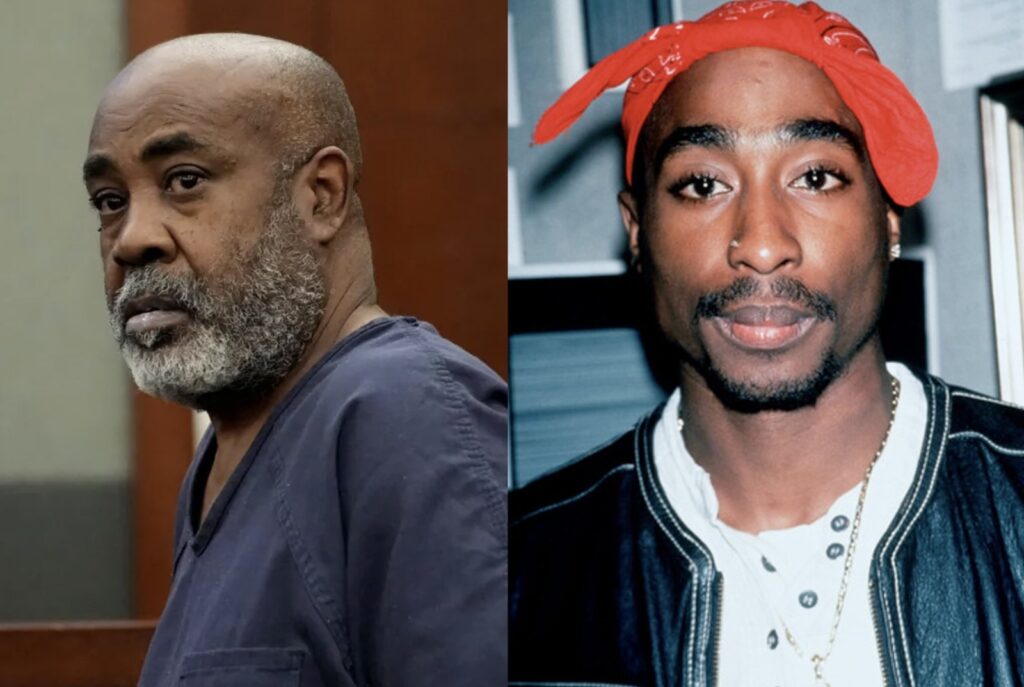
Duane “Keefe D” Davis, a former gang leader who has publicly discussed his involvement in the events surrounding the shooting, was convicted in connection with the murder of the rap icon.
But beyond the verdict lies a bigger question: why did it take nearly three decades for the justice system to reach this point?
A Case That Refused to Disappear
Tupac was killed in a drive-by shooting on the Las Vegas Strip in September 1996. Despite his global fame, the investigation remained unresolved for decades, becoming one of the most controversial cold cases in American popular culture.
The case changed significantly when prosecutors turned their attention to Davis, who had repeatedly discussed the shooting in interviews and other public appearances.
His own words eventually became a central part of the prosecution’s case.
When the Myth Became Evidence
For years, Davis appeared to benefit from the culture of street storytelling surrounding hip-hop. Stories about gang rivalries, violence and Tupac’s death became part of the mythology surrounding the era.
However, those public accounts took on a different meaning inside a courtroom.
Statements once presented as entertainment, autobiography or street credibility could now be examined as evidence. Davis’s willingness to publicly discuss his alleged role ultimately became a major liability.
The case therefore sends a clear message: publicly telling the story of a crime does not necessarily make its legal consequences disappear.
The Politics of a Cold Case
The conviction also raises questions about institutional accountability.
Tupac was not simply a famous musician. He was one of the most influential Black cultural figures of his generation. The failure to resolve his murder for decades contributed to broader concerns about how law enforcement handled high-profile violence involving Black artists and communities.
The eventual prosecution may provide closure to Tupac’s family and millions of fans. At the same time, it inevitably invites scrutiny of why meaningful progress took so long.
What the Verdict Changes
The case could have consequences beyond Tupac’s death.
It demonstrates the potential value of decades-old interviews, books and media appearances in modern criminal investigations. Public figures who once treated controversial stories as part of their personal mythology may now face renewed legal scrutiny when those accounts contain potentially incriminating details.
It also highlights the complicated relationship between hip-hop, crime and commercial media. For decades, stories of street violence have generated books, documentaries, interviews and entertainment revenue.
The Keefe D case demonstrates that those stories can eventually move from the entertainment world into the courtroom.
Questions That Remain
The conviction does not answer every question surrounding Tupac’s death.
Questions remain about the exact circumstances of the shooting, the identity and fate of the person who fired the fatal shots, and why the investigation remained unresolved for so long.
Those unanswered questions mean the verdict represents an important legal development, but not necessarily the final chapter in the historical debate surrounding Tupac’s murder.