
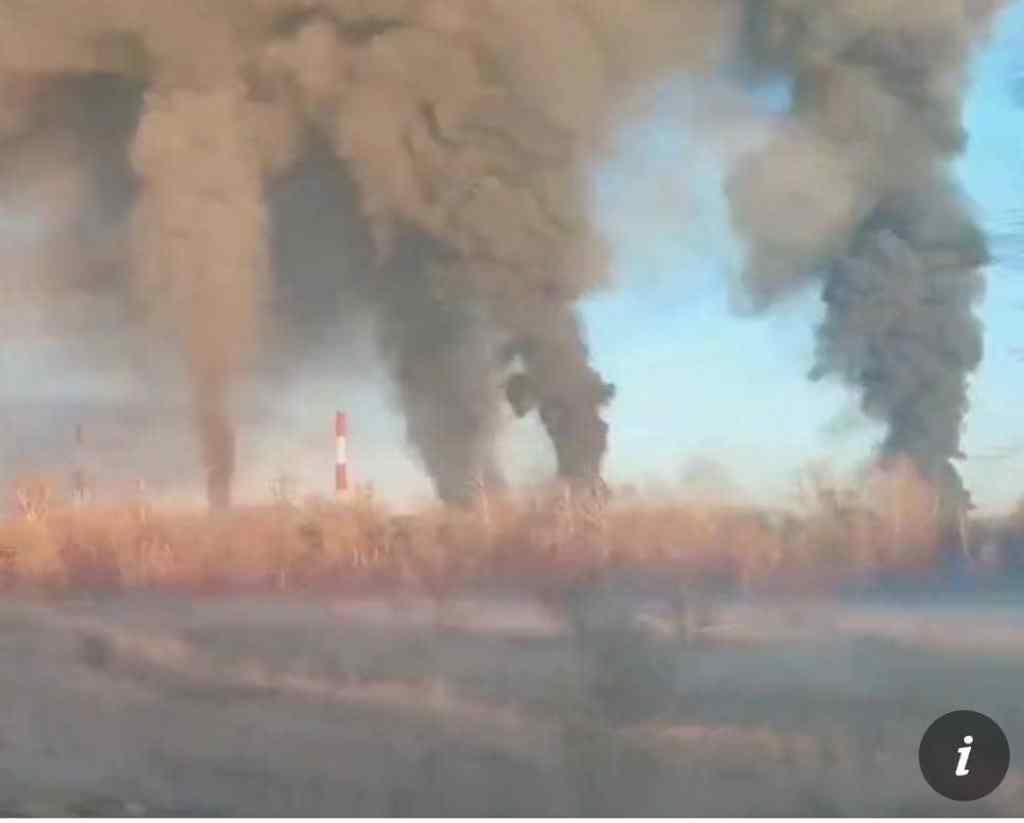

Ukraine Resumes Attacks on Russian Oil Refineries Despite Trump’s Pressure
Ukraine has renewed its attacks on Russian oil refineries despite pressure from US President Donald Trump to suspend strikes on Moscow’s energy infrastructure ahead of the November 3 US midterm elections.
The renewed attacks came after Ukrainian long-range drones reportedly struck major oil facilities in Russia, including the Kstovo refinery in Nizhny Novgorod region and another refinery in Samara region operated by state-owned energy company Rosneft.
Russian state media reported that the Kstovo facility caught fire following an overnight drone attack on Sunday, November 1. The strike reportedly followed an earlier attack on the Samara facility on Friday.
The developments came days after reports emerged that Ukraine had agreed to temporarily suspend attacks on Russian oil refineries following pressure from the Trump administration.
However, Ukrainian officials rejected claims that Kyiv had agreed to a 30-day suspension of the operations, insisting that no formal agreement had been reached.
According to reports by the Kyiv Independent, Ukrainian officials maintained that the country’s military campaign against Russian energy infrastructure remained ongoing.
Trump Pressures Ukraine to Halt Russian Refinery Attacks
The disagreement followed reports by The Wall Street Journal that Washington had urged Ukraine to suspend attacks on Russian oil facilities amid growing concerns over global fuel prices and renewed diplomatic efforts to end the war.
According to the report, US President’s son-in-law, Jared Kushner, reiterated the administration’s position during discussions with Ukrainian President Volodymyr Zelenskyy in Oslo on October 20.
Kushner reportedly proposed a 30-day suspension of attacks on Russian refineries as a gesture of appreciation for Washington’s efforts to facilitate negotiations between Moscow and Kyiv.
The reported request came amid worsening relations between Trump and Zelenskyy, particularly over Ukraine’s continued attacks on Russian energy infrastructure.
Trump had criticised Zelenskyy over rising fuel prices and expressed frustration with Ukrainian strikes on Russian oil facilities.
The US president also moved to ease sanctions affecting Russian diesel supplies, further highlighting Washington’s efforts to address energy market pressures.
However, Ukraine’s position remained that its long-range drone operations were necessary in response to Russia’s continued attacks on Ukrainian cities and critical infrastructure.
Zelenskyy Defends Ukraine’s Military Response
Ukrainian President Volodymyr Zelenskyy defended his country’s military operations, arguing that Kyiv had to respond to Russia’s continued bombardment of its energy facilities.
He said Russian forces had intensified attacks using drones and ballistic missiles, targeting critical infrastructure and leaving hundreds of thousands of households without electricity.
According to Zelenskyy, the intensity of the Russian attacks remained high, with Moscow seeking to take advantage of shortages in Ukraine’s ballistic missile interception systems.
“The intensity of the strikes is very high, and the Russians are seeking to maximally exploit the deficit of ballistic missile interceptors,” he said in a statement shared on Telegram.
Kyiv also experienced electricity disruptions lasting between eight and 10 hours on Sunday after a critical thermal power plant was damaged during Russian attacks.
The strikes reportedly affected four Ukrainian regions, adding to concerns over the country’s ability to protect its energy infrastructure as the conflict continues.
Zelenskyy Claims Russia Suffered Heavy Military Losses
Zelenskyy also claimed that Russian forces recorded their highest monthly military casualties since the beginning of the full-scale invasion in February 2022.
According to the Ukrainian president, Russia lost approximately 54,400 military personnel through deaths and injuries in October alone.
He further claimed that Ukrainian forces regained control of 96.2 square kilometres of territory during the month, exceeding the 85.8 square kilometres Russia reportedly captured over the same period.
The figures were presented by Zelenskyy as evidence that Russian forces were facing growing difficulties on the battlefield.
However, the casualty and territorial claims have not been independently verified.
Oleshky Ceasefire Ends After Humanitarian Evacuation
Meanwhile, a six-day local ceasefire in the Russian-occupied town of Oleshky in Ukraine’s Kherson region ended on Sunday, November 1.
The temporary truce, which lasted from October 27 to November 1, was facilitated through humanitarian cooperation involving Ukraine, Russia and the United States, with US First Lady Melania Trump playing a role in the arrangement.
The ceasefire provided an opportunity for humanitarian operations, including the delivery of essential supplies and the evacuation of civilians from dangerous areas.
Ukraine’s Human Rights Ombudsman, Dmytro Lubinets, confirmed the end of the arrangement, describing the operation as an important development in humanitarian cooperation between the parties.
He said the ceasefire had enabled residents to leave dangerous areas and reunite with their families.
Reports indicated that hundreds of civilians were evacuated during the operation, with both Ukrainian and Russian officials acknowledging the humanitarian effort.
Pope Calls for Broader Russia-Ukraine Peace Talks
Following the humanitarian operation in Oleshky, the Pope expressed hope that the cooperation between Russia and Ukraine could encourage further diplomatic engagement.
He said the willingness of both sides to participate in the temporary ceasefire demonstrated the possibility of cooperation, even amid the ongoing conflict.
The Pope urged both countries to build on the humanitarian arrangement and pursue dialogue that could contribute to a broader peace agreement.
His appeal came as international efforts to end the war continued, despite persistent disagreements over territorial control, security guarantees and the future of occupied Ukrainian regions.
Russia Signals Readiness for Direct Talks With Zelenskyy
Diplomatic efforts to end the Russia-Ukraine war are also expected to continue, with reports indicating that trilateral discussions involving Russia, Ukraine and the United States could take place later in November.
The proposed negotiations would form part of renewed efforts by Washington to bring both countries towards a possible settlement.
Kremlin officials also indicated that Russian President Vladimir Putin remained willing to speak directly with Zelenskyy by telephone.
However, Moscow reportedly insisted that European leaders supporting Ukraine should not participate in such a conversation.
The position highlights continuing disagreements over the role of European governments in negotiations and the broader international framework for resolving the conflict.
Despite the possibility of renewed diplomatic engagement, Ukraine’s continued attacks on Russian oil infrastructure and Moscow’s bombardment of Ukrainian energy facilities demonstrate the challenges facing efforts to secure a lasting ceasefire.
For now, the conflict remains unresolved, with military operations and diplomatic negotiations continuing on separate fronts.

