

Inside the Nigerian Senate’s Strategy to Combat Banditry and Insurgency
Nigeria continues to face serious security threats across several regions. Rural banditry affects the North-West and North-Central. Meanwhile, insurgency remains active in the North-East.
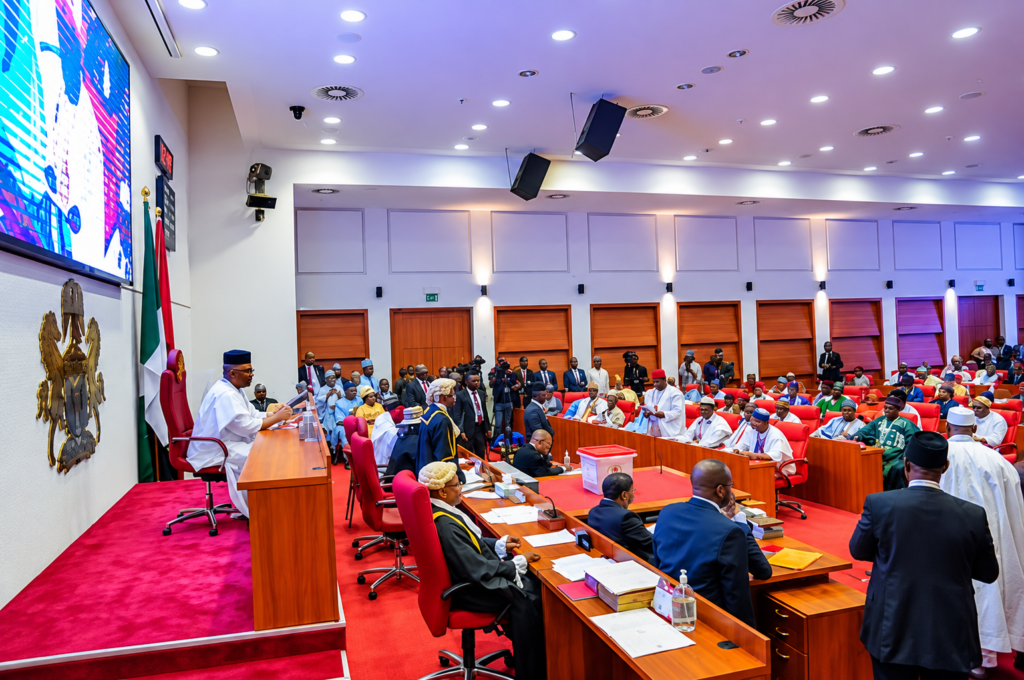
In response, the National Assembly has intensified efforts to strengthen national security. Specifically, the Senate has adopted several legislative and policy measures. These initiatives aim to combat banditry, insurgency, and other violent crimes. As a result, the Senate now plays a more active role beyond legislative oversight.
1. Decentralizing Security: The Push for State Police
For decades, Nigeria has relied on a centralized policing system. However, many experts believe this structure limits rapid responses to local security threats.
Consequently, the Senate is accelerating constitutional amendments to establish state police. The proposed reform would empower states to manage local security challenges more effectively.
Furthermore, community-based policing could improve intelligence gathering and emergency responses. Local officers would also understand regional security concerns better. Therefore, authorities could respond faster to kidnappings and bandit attacks.
2. Rejection of Appeasement: Banning Peace Deals and Amnesty
The Senate has firmly rejected negotiations with criminal groups. Lawmakers oppose ransom payments, peace agreements, and amnesty for armed gangs.
Additionally, senators warned state governments against negotiating with violent groups. They argued such agreements encourage more criminal activities.
According to lawmakers, previous peace deals produced limited success. Instead, they often strengthened criminal organizations financially. Consequently, many gangs acquired more weapons and expanded their operations.
3. Targeting Digital Propaganda and Ransom Displays
Criminal groups increasingly exploit social media to spread fear. They also display wealth allegedly obtained through kidnappings.
Therefore, the Senate directed security agencies to strengthen cyber surveillance. The Nigeria Police Force and cybersecurity authorities received specific directives.
Authorities will monitor platforms such as TikTok for suspicious activities. They will also investigate individuals displaying unexplained wealth online.
Moreover, investigators hope to identify financiers and criminal collaborators. This strategy could weaken criminal recruitment and propaganda efforts.
4. Addressing Arms Proliferation and Porous Borders
Illegal weapons continue to fuel insecurity across Nigeria. Small Arms and Light Weapons remain major tools for bandits and insurgents.
Accordingly, the Senate engaged officials from the National Centre for the Control of Small Arms and Light Weapons. The discussions focused on border security challenges.
Lawmakers also examined weaknesses along Nigeria’s borders. They aim to stop illegal weapons before reaching criminal groups.
Furthermore, stronger border enforcement could disrupt international arms trafficking networks. This approach would reduce weapon supplies to non-state actors.
5. Bipartisan Unity and Accountability in Defense
The Senate continues to promote national unity against insecurity. Senate President Godswill Akpabio has repeatedly encouraged bipartisan cooperation.
Moreover, lawmakers insist that security should remain above political and regional interests. They describe insecurity as a direct threat to Nigeria’s stability.
The Senate also maintains strict oversight of security agencies. It regularly reviews defense spending and screens senior security appointments.
Ultimately, lawmakers believe stronger institutions and effective law enforcement offer the best path toward lasting national security.